Serpotrack
Web application development
In this case study I will take you through the development of Serpotrack and the associated challenges, solutions, and positive outcomes.
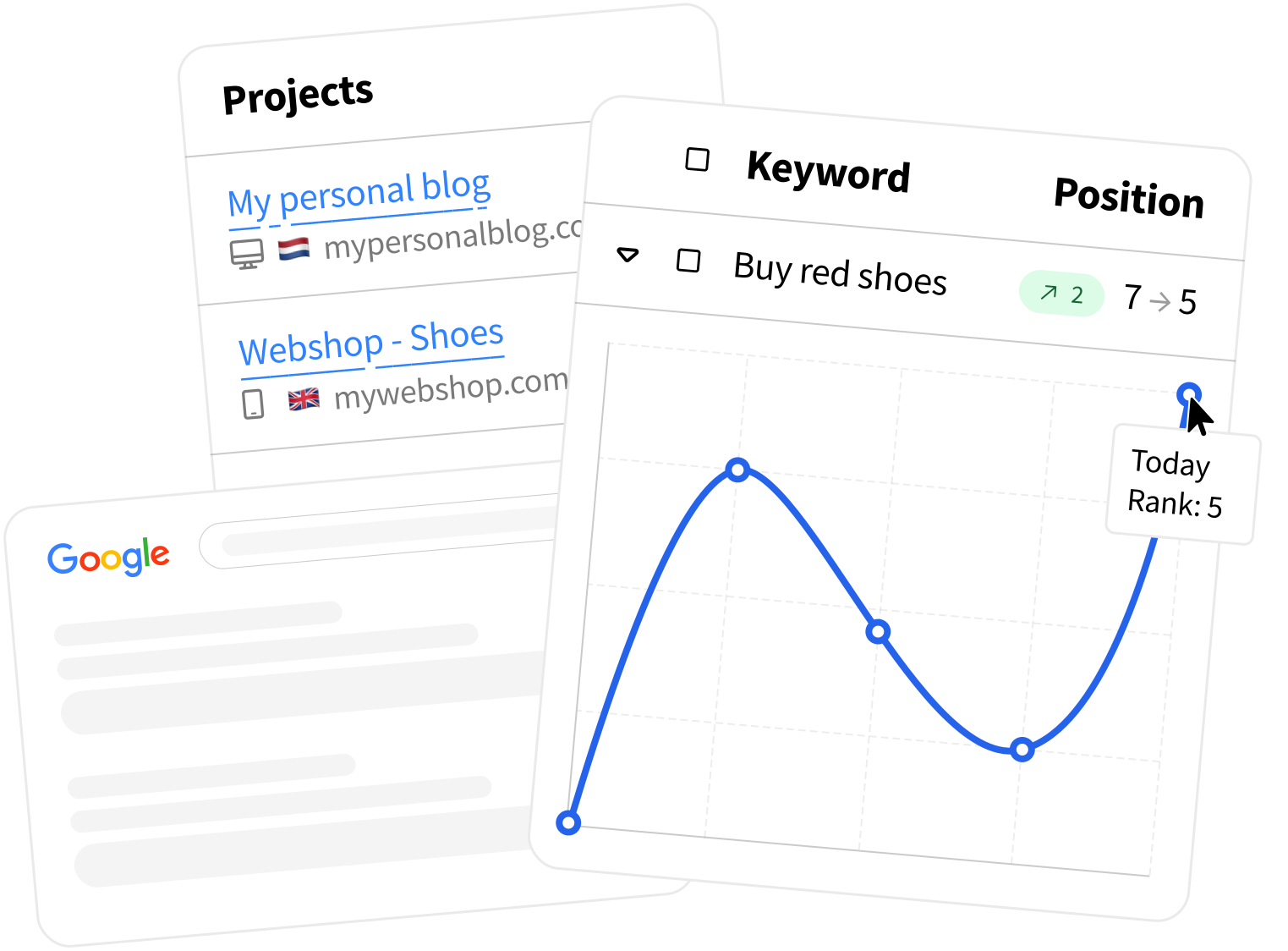
Serpotrack is a tool for online marketers & SEO specialists to monitor website positions in Google search results (SERP).
Type
- Web application
- SaaS
Role
- Owner
- Software architect
- Software developer
- Maintenance
- CI/CD
Timeline
- 2022 - Current
Client
- Own project
Challenges and goals
This project started on my own initiative. For my own professional and hobby projects, I often do the SEO myself (in some cases I do use professional online marketers).
One part of SEO is monitoring my website positions in Google search results. This allows me to see which pages are ranking well and which ones could be better — the higher your position in search results, the better. This is a very common practice in the SEO world.
There are also numerous SERP rank trackers in circulation. However, for hobby or small-scale use, these types of tools are relatively expensive. That is why I started this project. This way I could build an affordable tool with the features I needed. Initially it was built for my own use, but now everyone can register.

Architecture
Based on my initial requirements I developed the architecture. Although the project started with the minimum requirements to go live as soon as possible, I developed it with the idea that it will be expanded.
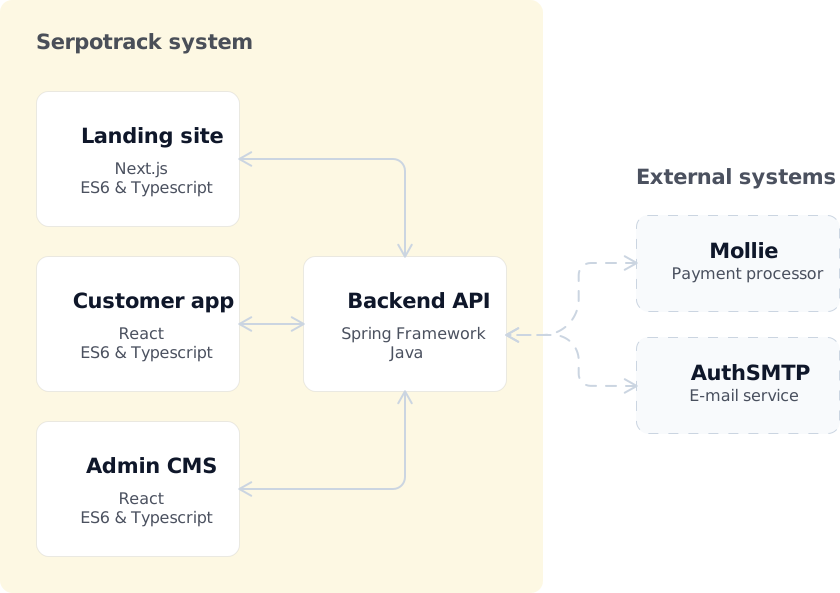
In the diagram below you can see at a fairly abstract level how the whole thing fits together. You can see which components there are, internal and external, and how they work together.
Techniques
As you can see in the architecture diagram above, there is one backend API. It is built with Java Spring Framework. The database is a PostgreSQL database.
The public website is built with Next.js. This is because of the built-in SEO features, as it is important that this site is found organically via search engines.
The user and admin environments are React applications. In all three of these frontend applications I used Typescript and Tailwind CSS.
 Java
Java Typescript
 Spring Framework
 Next.js
 React
React Tailwind CSS
 PostgreSQL
 Maven
Maven JUnit
JUnit Cucumber.js
 ES6 (Javascript)
 NPM
NPM Ubuntu
 Caddy 2
 PM2
PM2 AuthSMTP
 Mollie
Development process
Although this project started as a personal project, I approached it from the start like any other professional project of mine. Using project management tools, such as Jira, I worked on the project iteratively using Scrum.
I have continuously delivered small sub-products and adjusted requirements where necessary. In a number of cases I have asked for feedback from professional online marketers.
Implementation
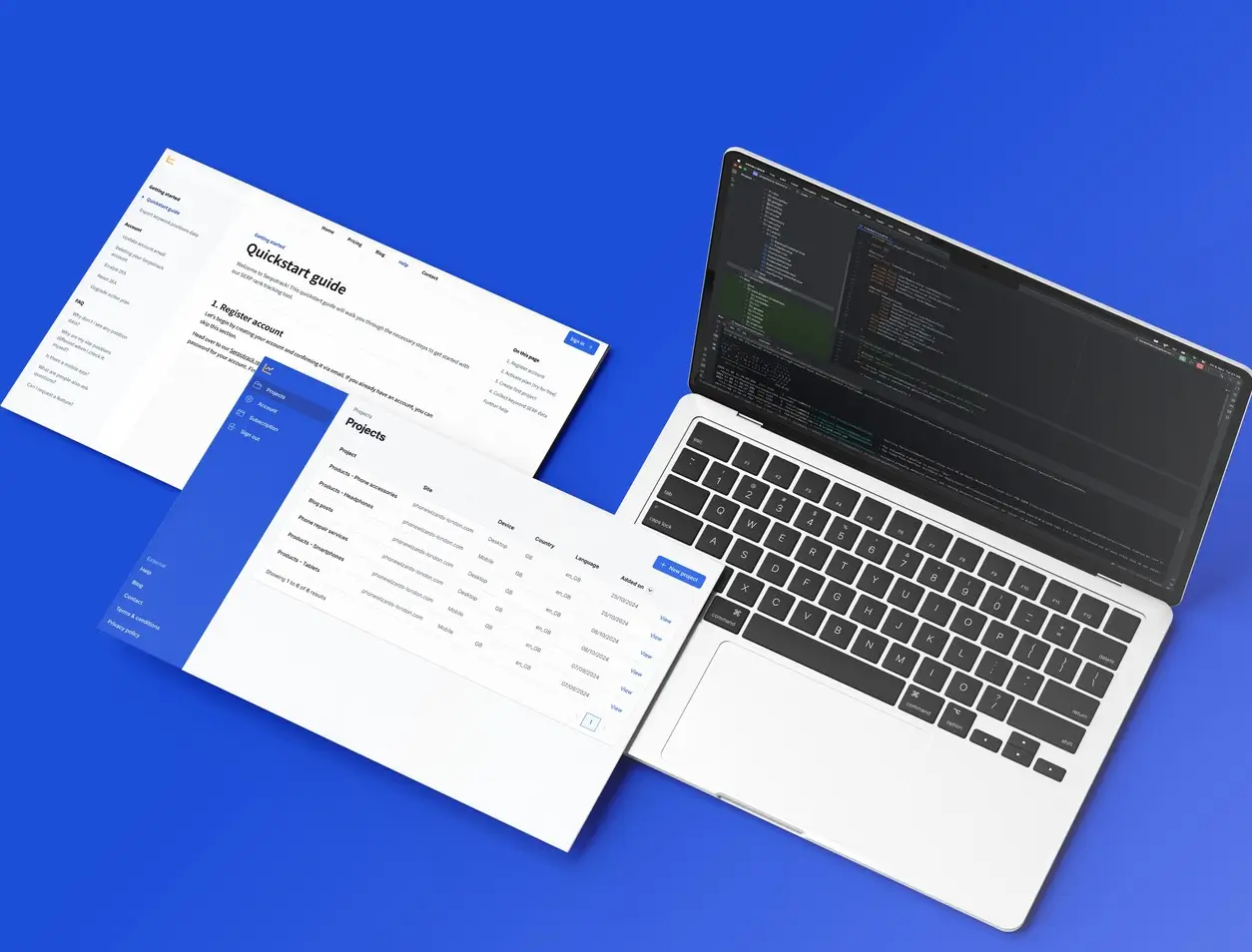
Although I started with minimal requirements for a quick go-live, I wrote highly maintainable and extensible code.
I always value code quality, regardless of the type of project.
Testing
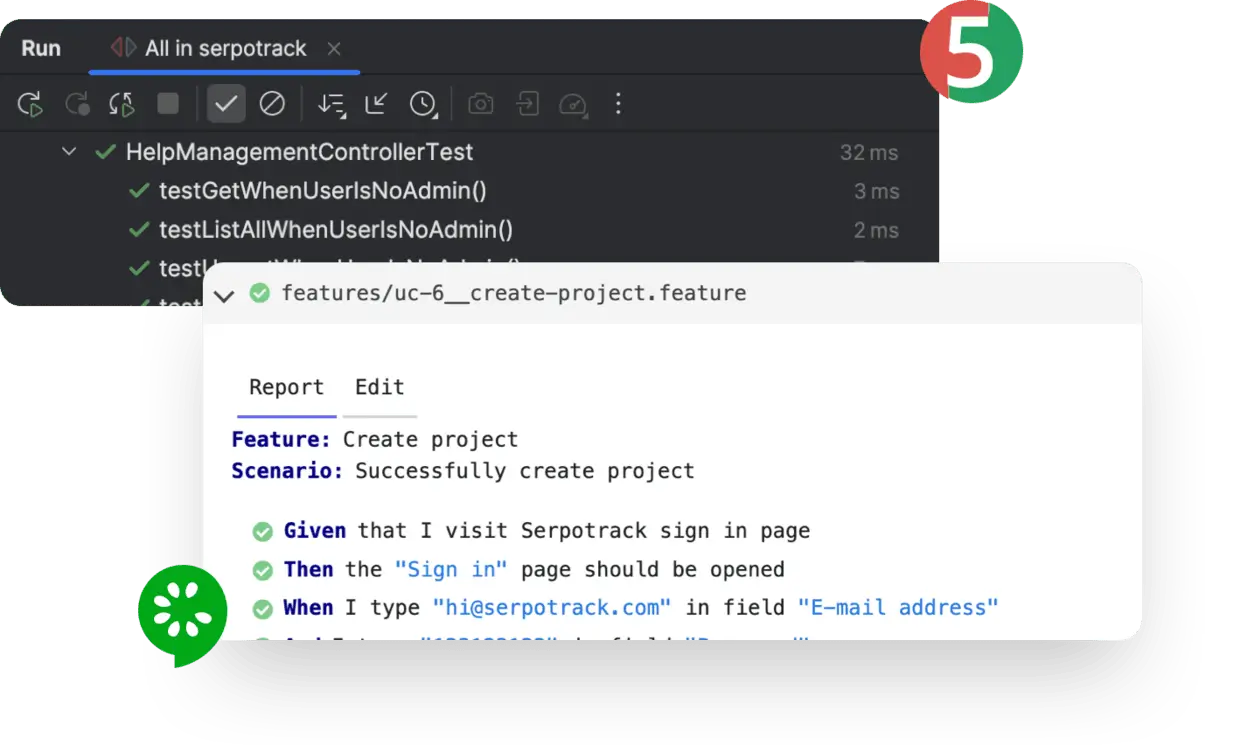
In addition to code quality, testability is important. All code is tested automatically.
The backend code is tested using unit and integration tests.
The frontend applications are tested with end-to-end tests. For this I use Cucumber and Selenium.
Continuous development & integration
Since the first release in 2022, a lot has been developed. New features have been added, the application has been rebranded and made public.
Screenshots
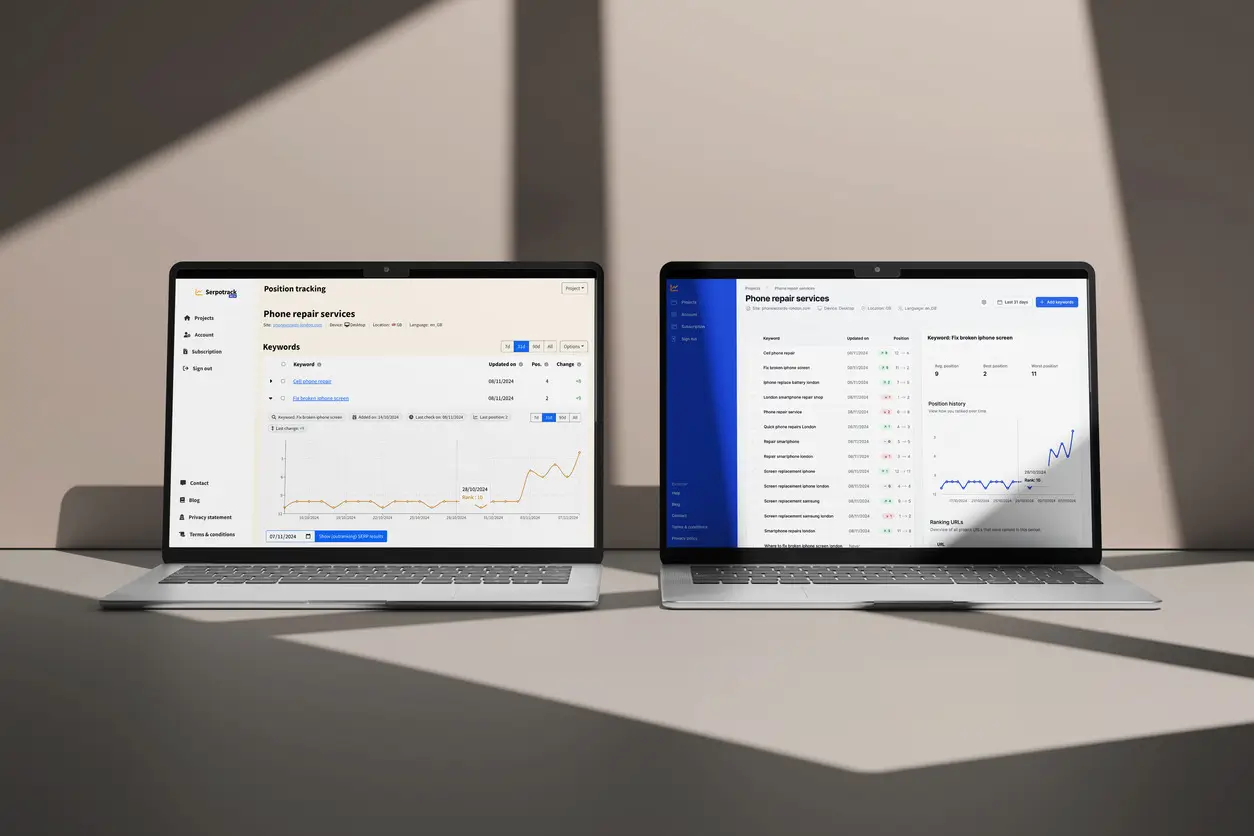
Monitoring SERP positions for a user's project.
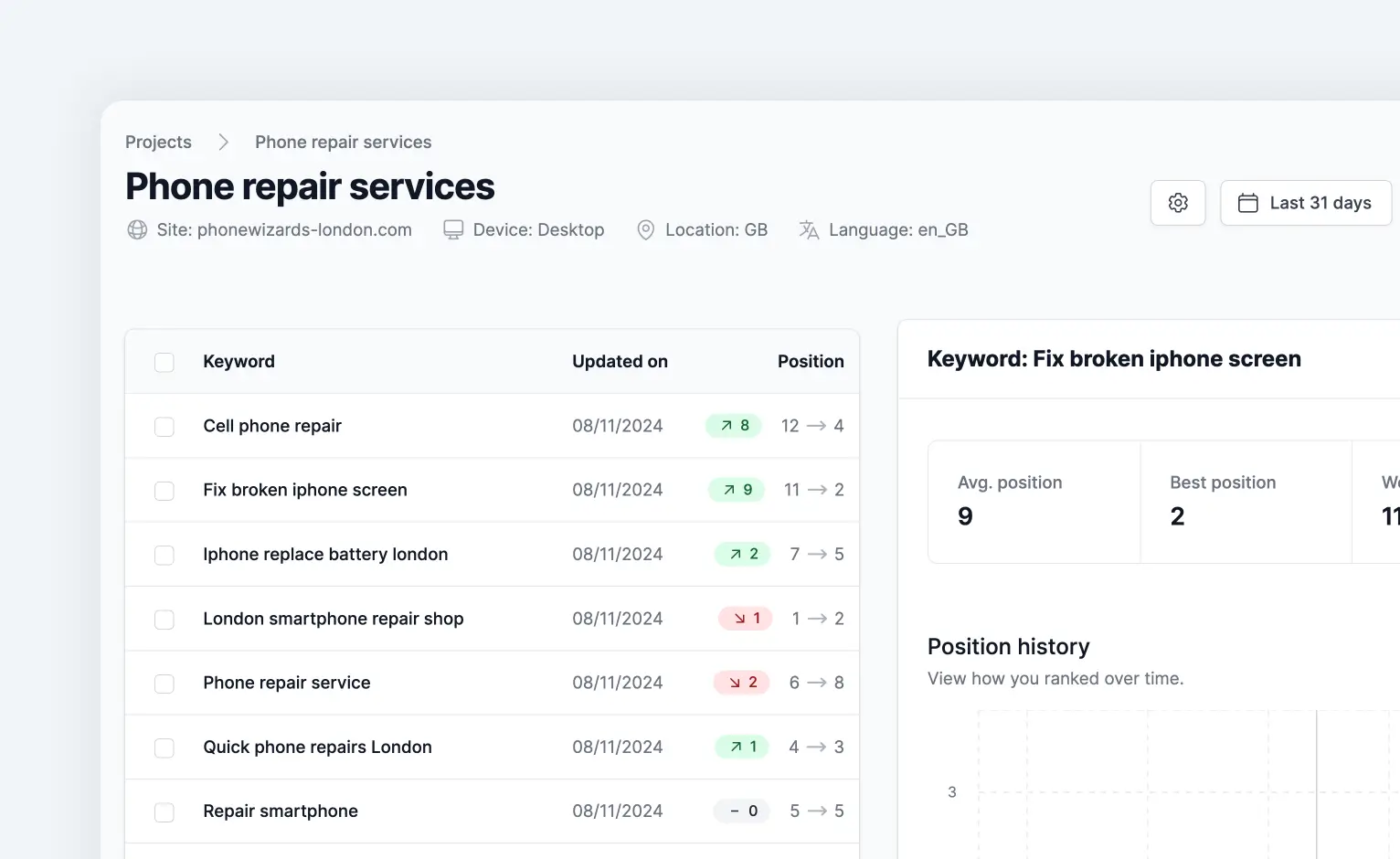
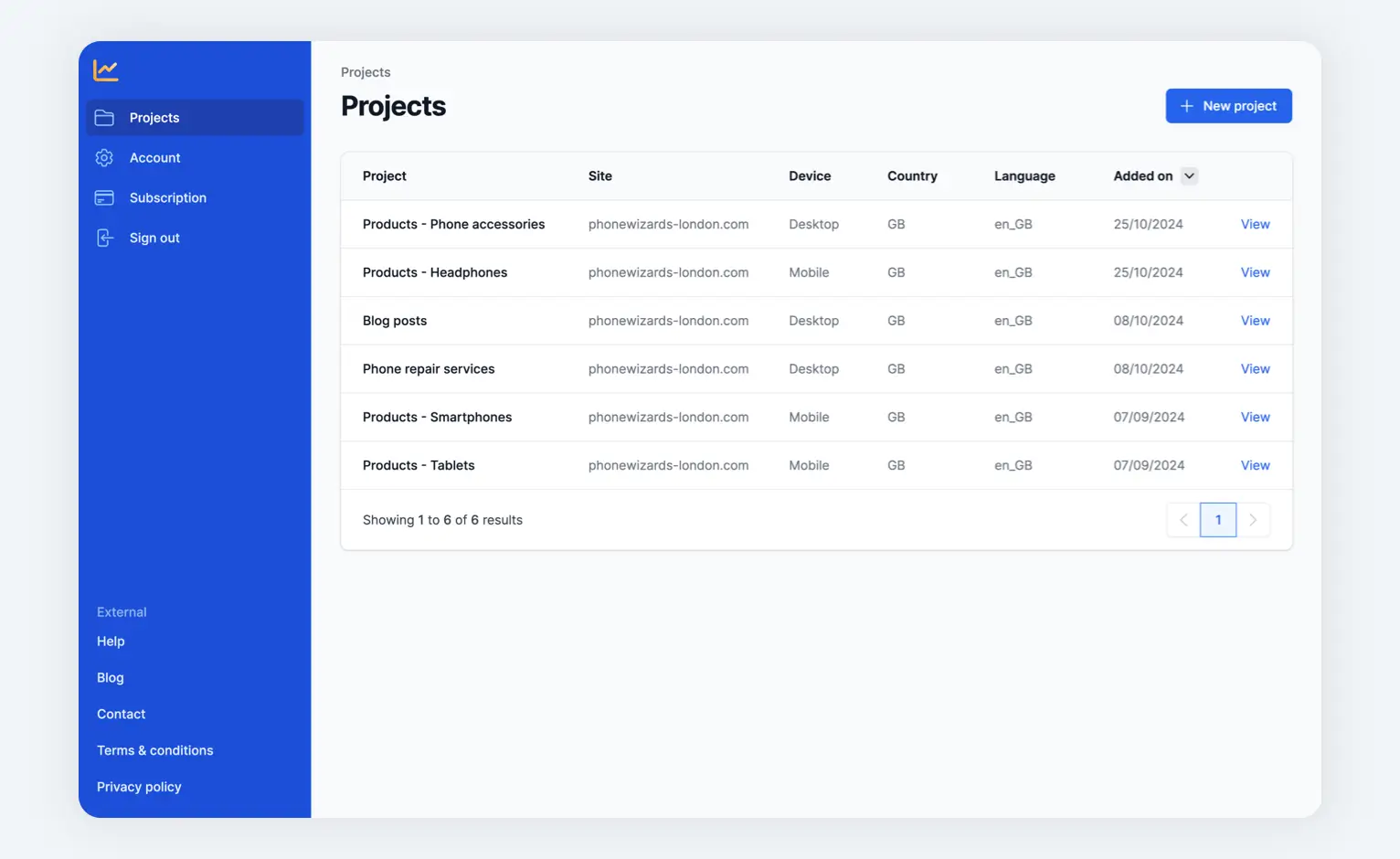
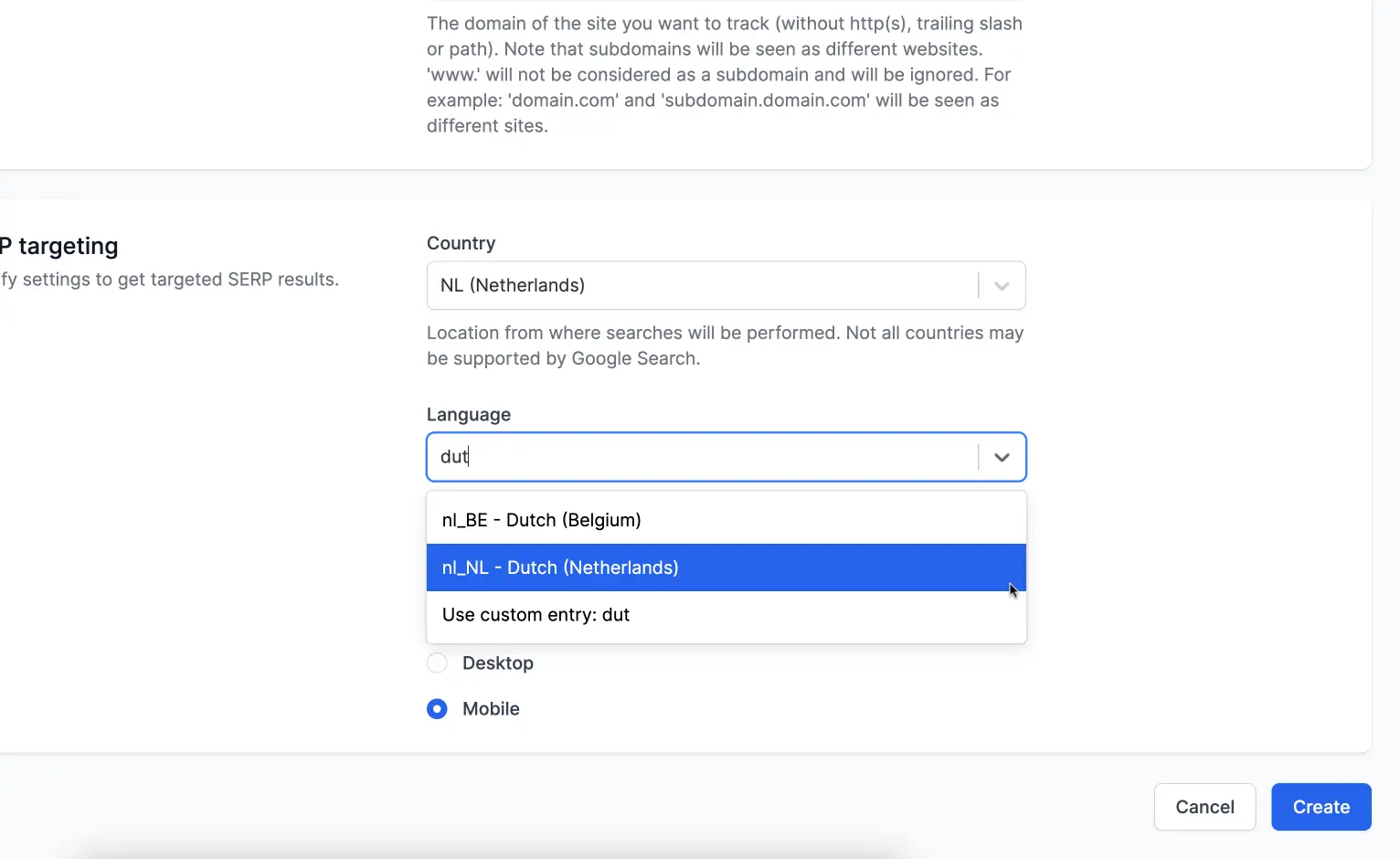
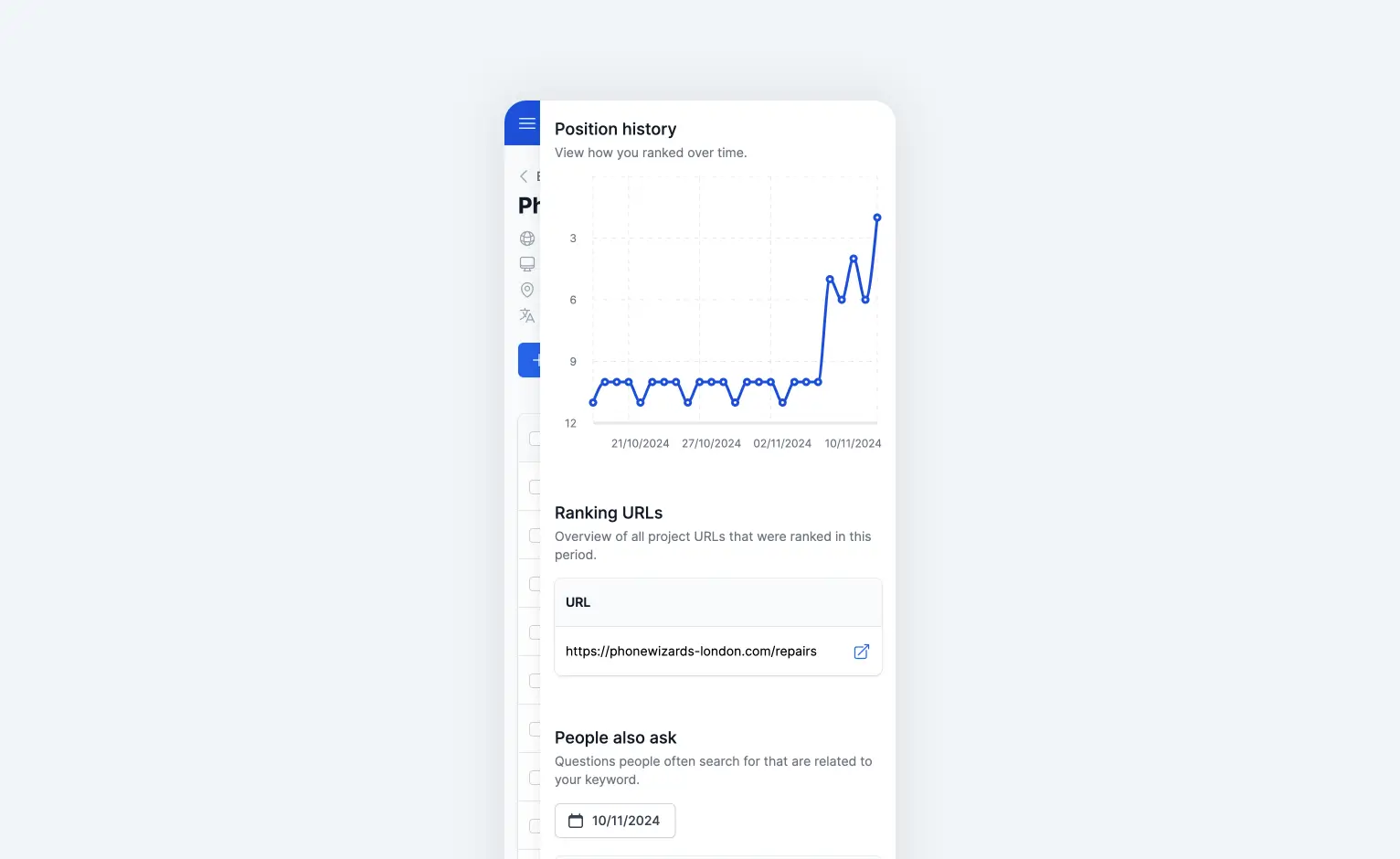
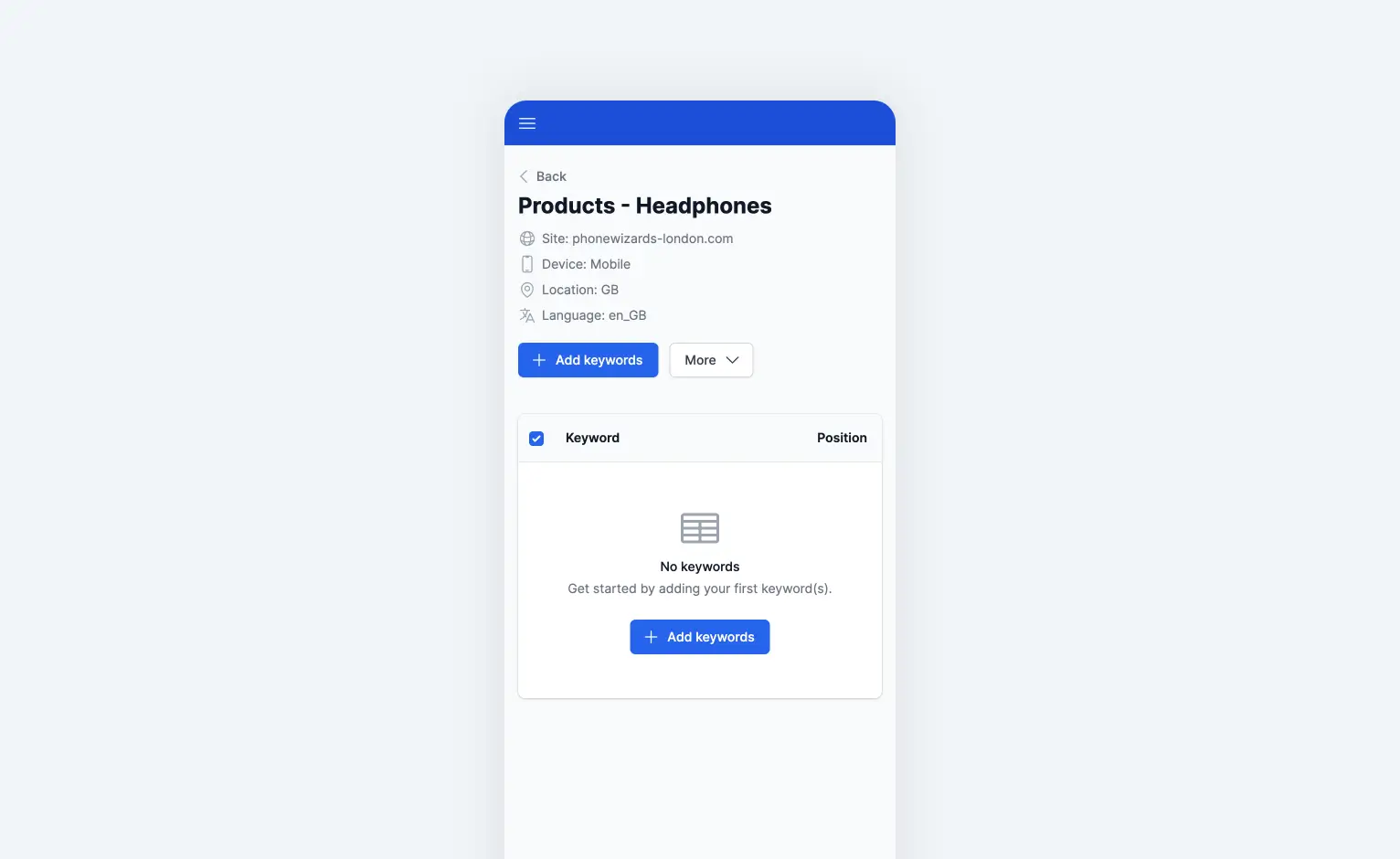
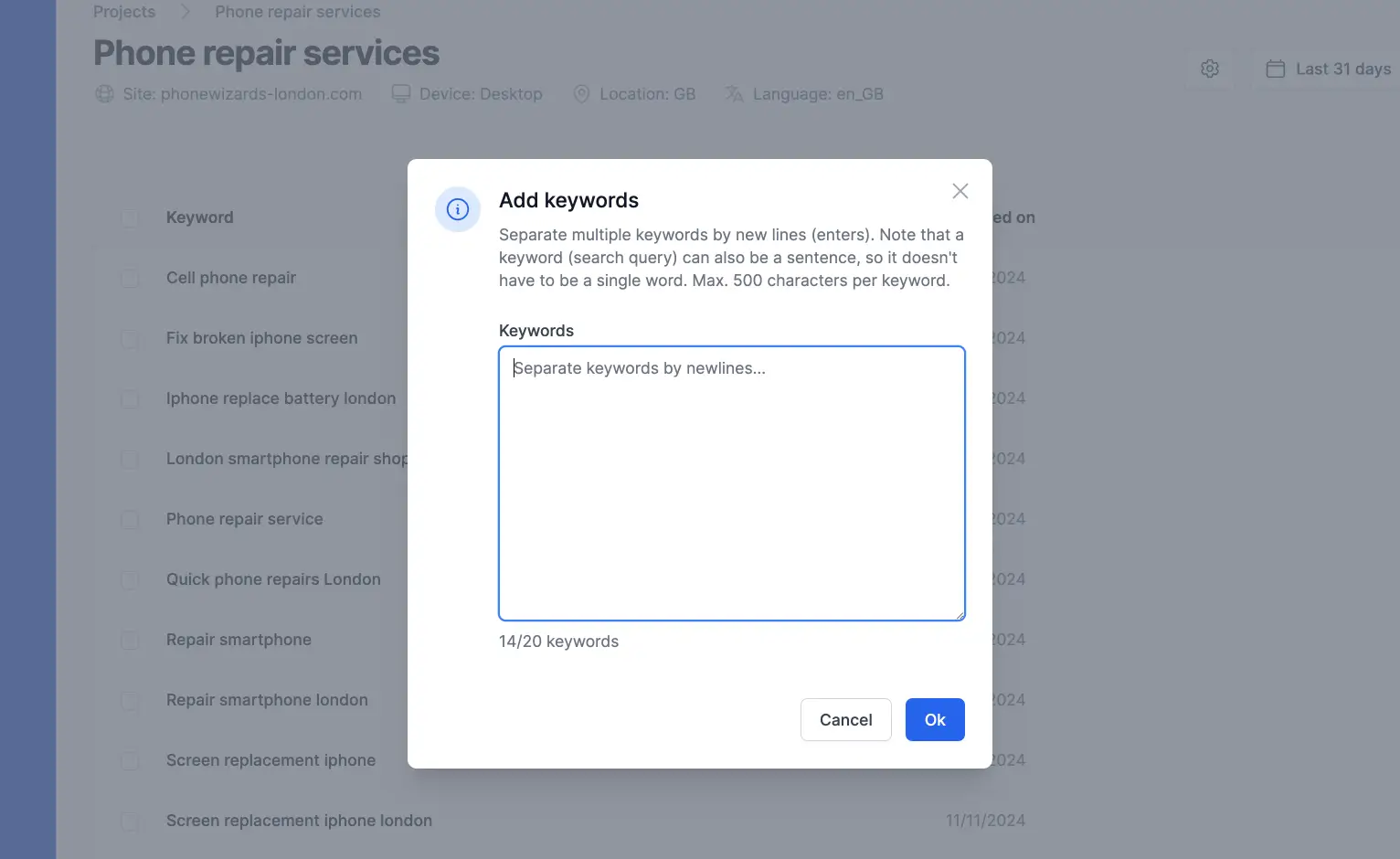
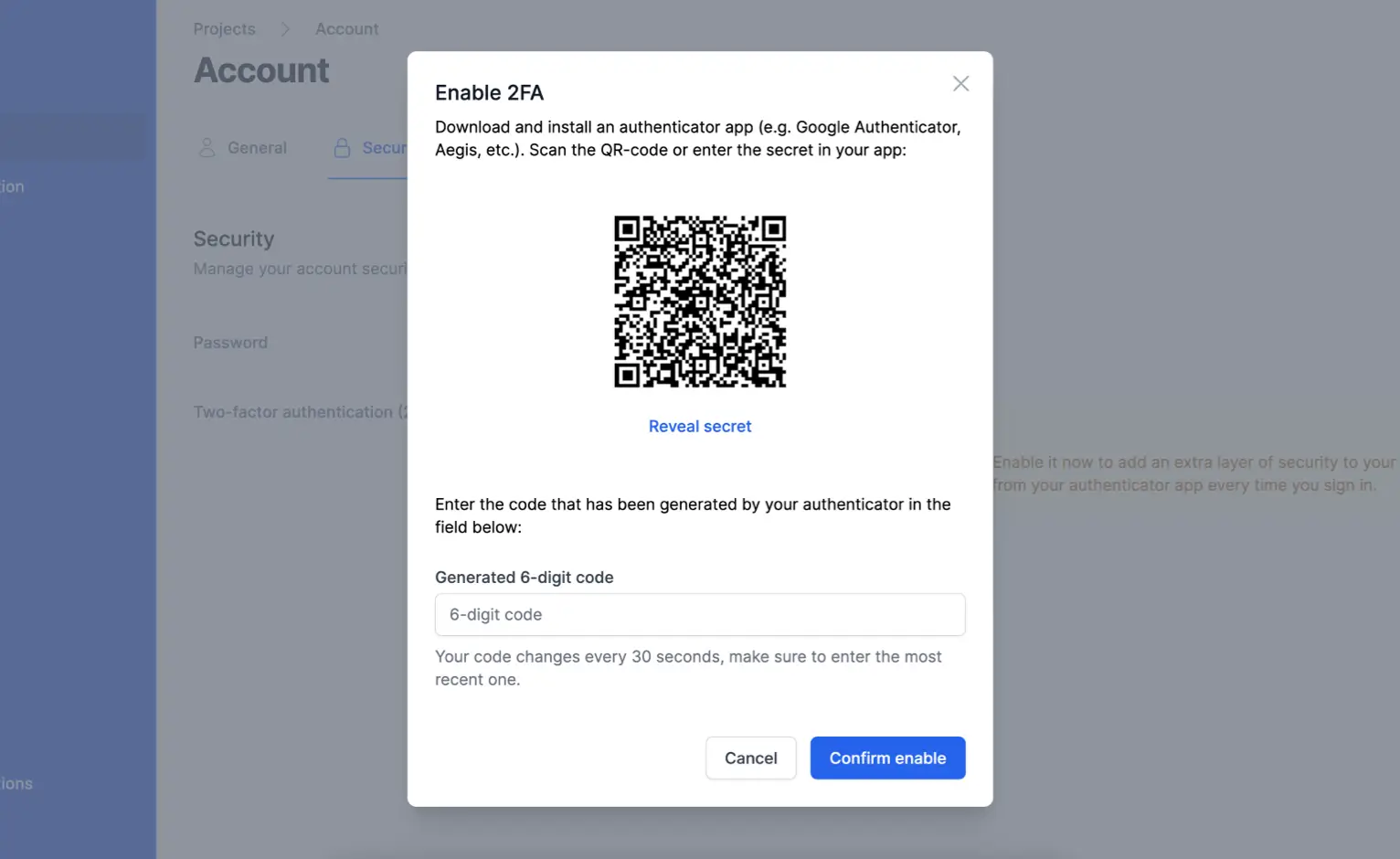
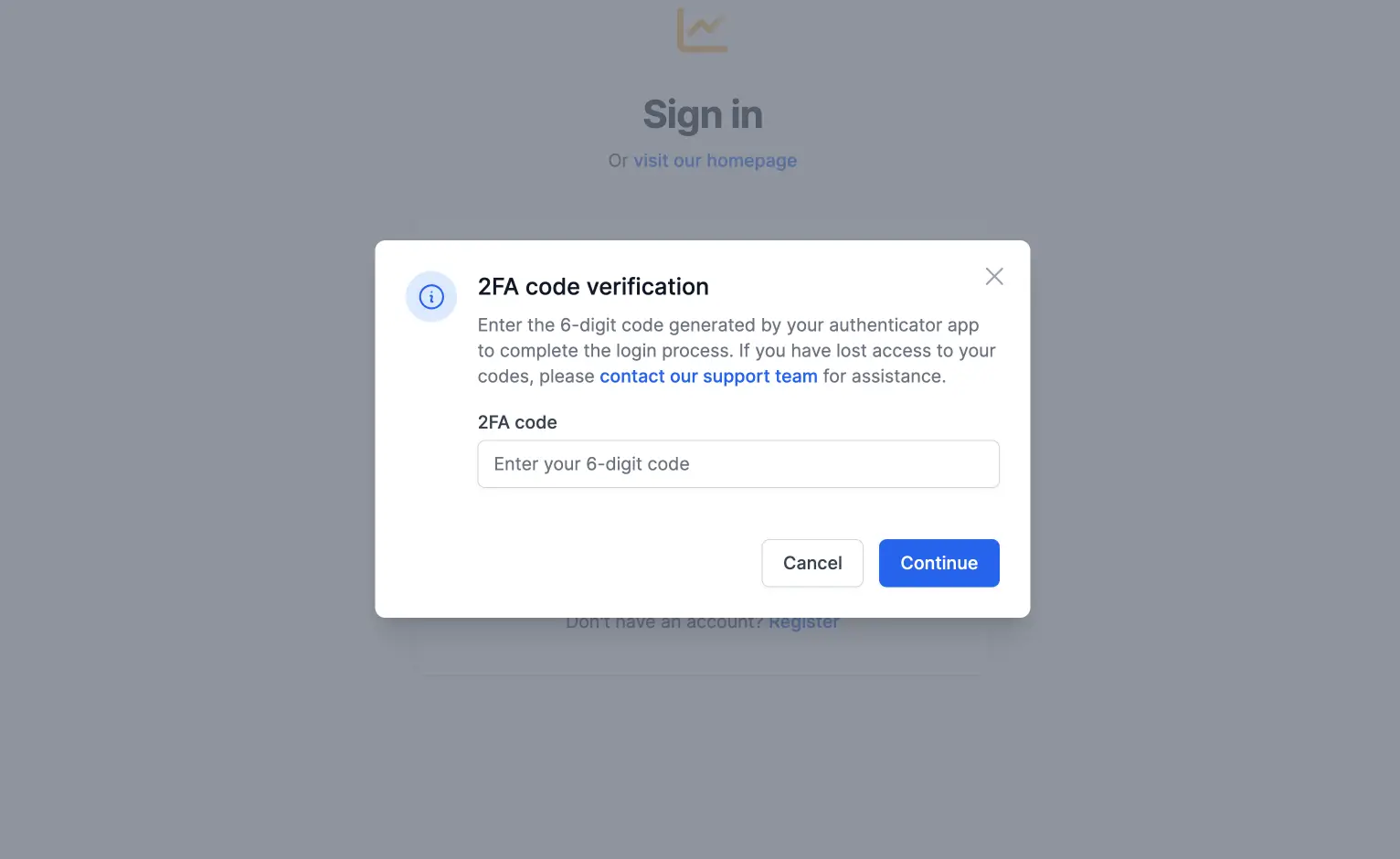
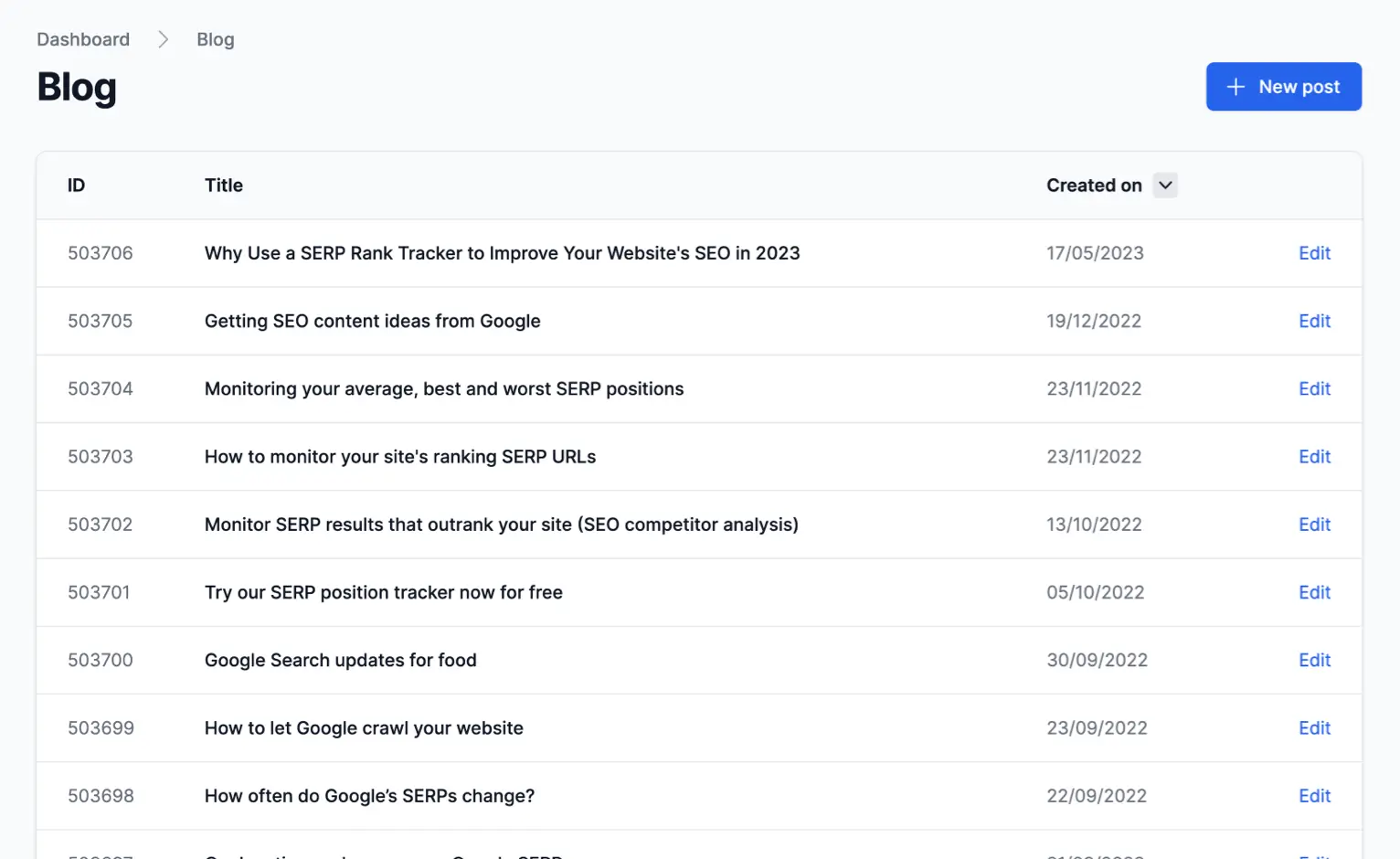

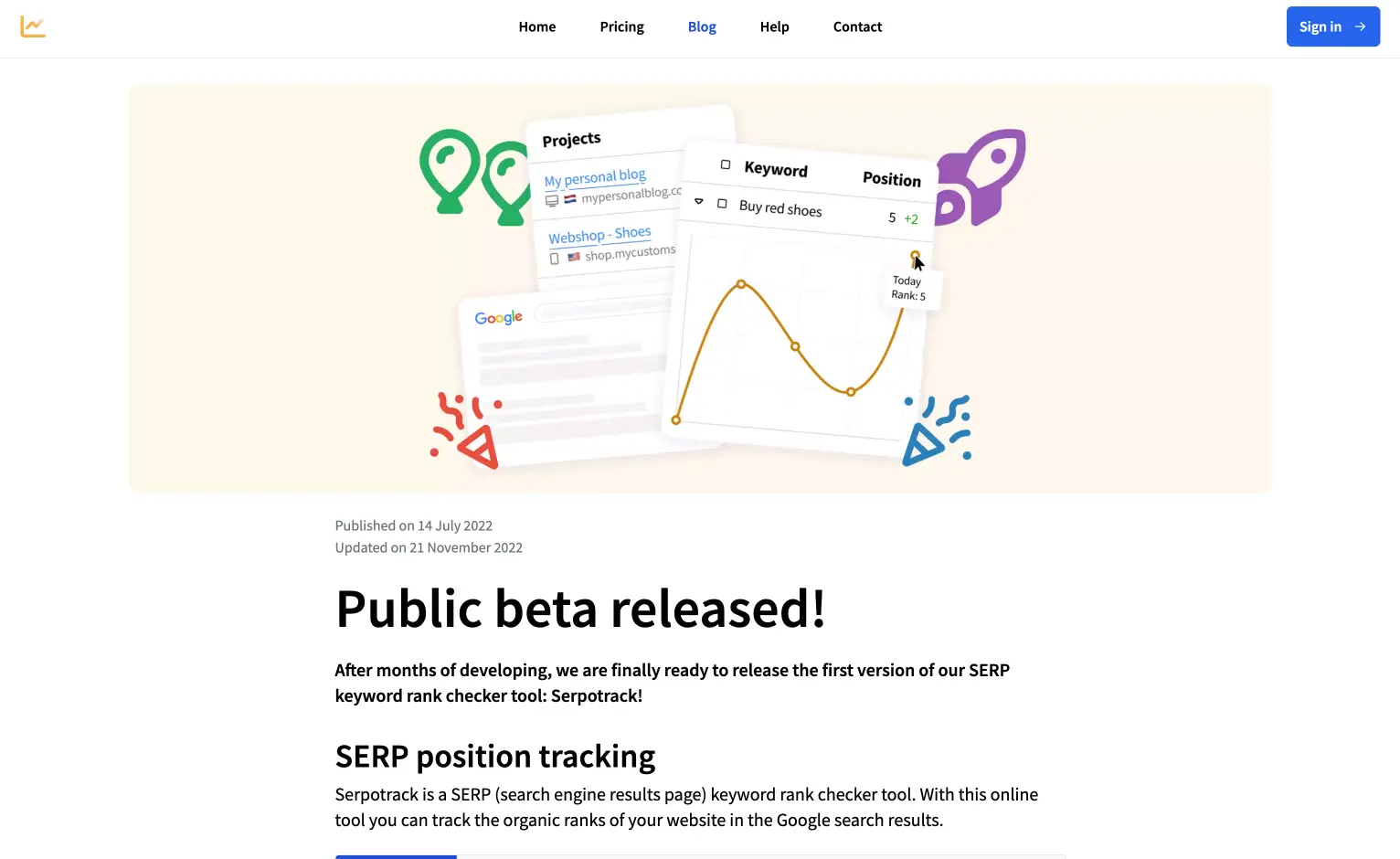
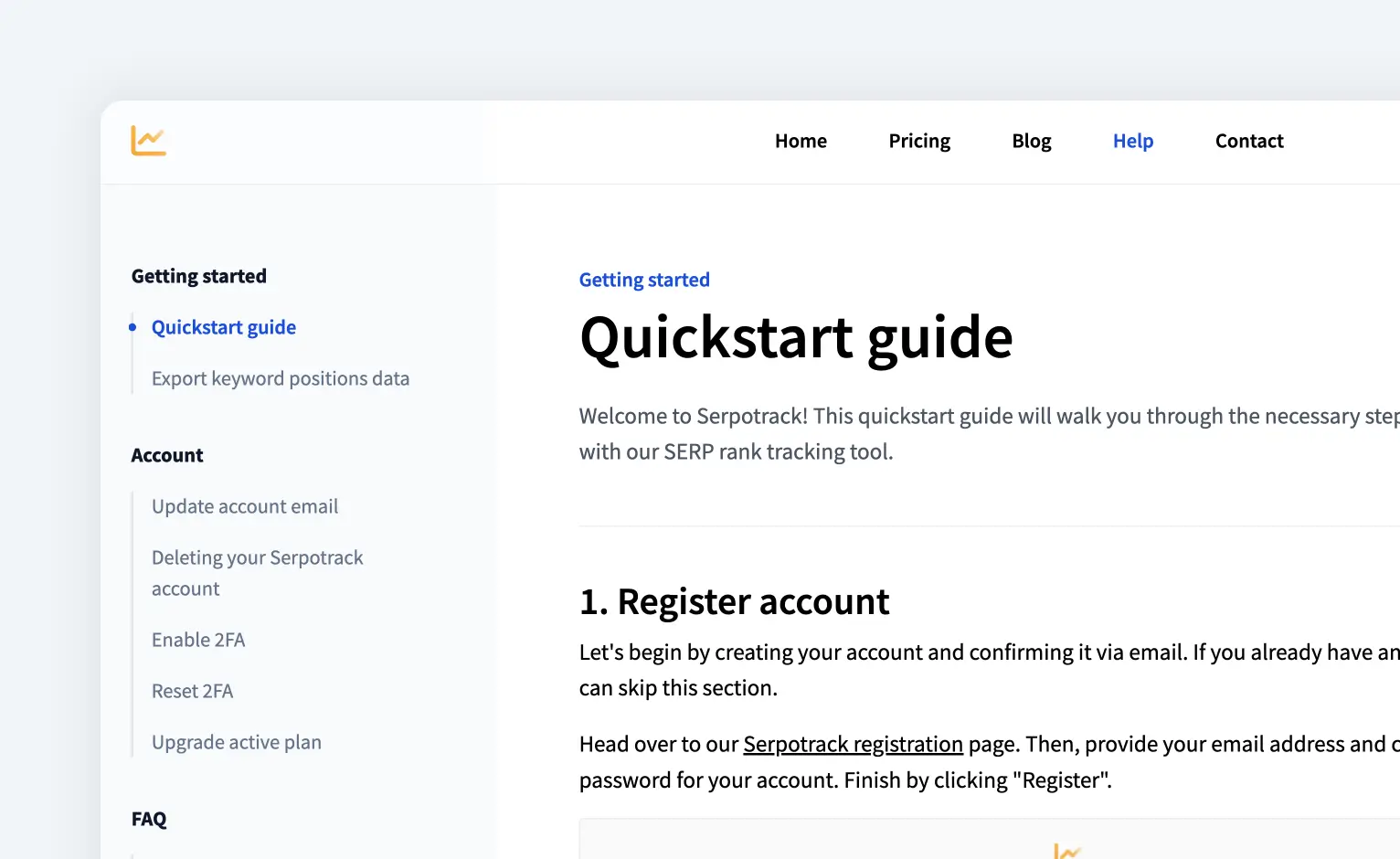
Monitoring SERP positions for a user's project.